
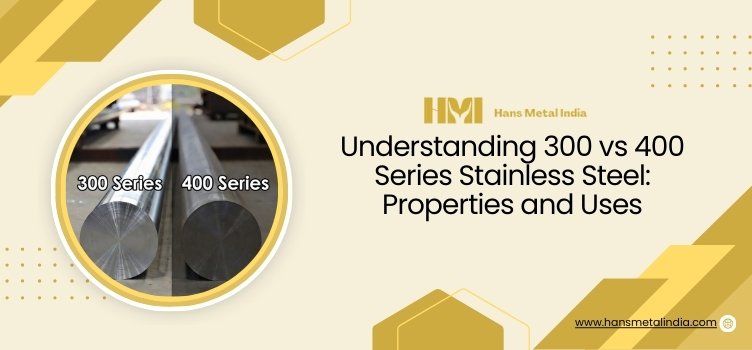
Understanding 300 vs 400 Series Stainless Steel: Properties and Uses
A Practical Guide to Choosing Between 300 and 400 Series Stainless Steel for Construction and Industry
Stainless steel is one of the most reliable materials for large construction projects and industrial projects. There is, however, not all the same stainless steel. The Understanding 300 vs 400 Series Stainless Steel: Properties and Uses is necessary when construction heads, architects, and contractors need to find the proper way to balance the strength, resistance to corrosion, cost, and long-term performance.
The 300 series and the 400 series stainless steels vary considerably in chemical makeup, mechanical behavior as well as practical uses. An incorrect grade will result in a pre-mature corrosion, an unwarranted maintenance expense or even restricted performance. Conversely, the choice of the appropriate series can enhance the durability, safety and efficiency of the project. This guide describes the major differences in a clear and decision-oriented manner that will aid in the improvement of material decisions in challenging building and infrastructural conditions.
What Is 300 Series Stainless Steel?
High chromium and nickel content of the 300 series stainless steel is mostly associated with it. Nickel is also essential in making the metals resistant to corrosion and toughness, particularly in extreme environments or in the presence of moisture.
Key properties of 300 series stainless steel include:
- Very good corrosion and oxidation resistance.
- Non-magnetic in annealed condition.
- Large ductility and formability.
- High performance in low and high temperatures.
Due to these characteristics, the 300 series is popular within the scope of the projects when the priority is on the appearance, hygiene, and long service life.
Common Uses of 300 Series Stainless Steel
- Construction elements along the coast or in the humid areas.
- Cladding and ornamentation in architecture.
- Commercial kitchen installation and food processing.
- They include chemical storage pipes and tanks.
To architects and contractors, the 300 series has been popular where long-term corrosion protection is needed, and the initial material cost is not so important.
What Is 400 Series Stainless Steel?
The 400 series stainless steel is composed of chromium with small or no nickel. This composition difference causes an increase in strength and hardness, but low corrosion resistance relatively.
Key properties of 400 series stainless steel include:
- Magnetic structure
- Tensile strength greater than 300 series.
- High wear and abrasion resistance.
- Reduced price because of less nickel.
These features render the 400 series applicable in applications where the mechanical strength and cost control are of more priority than the extreme corrosion resistance.
Common Uses of 400 Series Stainless Steel
- Brackets and supports: Structural supports.
- Car and transportation parts.
- Machinery components and equipment.
- Nuts and load-carrying metalwork.
The 400 series is a convenient and cost-effective approach in the construction works that provide controlled environments.
Key Differences Between 300 vs 400 Series Stainless Steel
It is imperative to perform a direct comparison of the performance factors of 300 vs 400 Series Stainless Steel: Properties and Uses to understand their properties and uses.
| VALUES COMPARISON CHART | DUPLEX STEEL | SS 304L AND 316L | SS 410 AND 416 |
|---|---|---|---|
| CORROSION RESISTANCE | Excellent | Good | Moderate |
| MACHINABILITY | Excellent | Poor/Gummy – will not hold bright finish | Good |
| WELDABILITY OF STEEL | Excellent | Good | Moderate¹ |
| SOUR SERVICE (SS) ENVIRONMENTS | Excellent | Poor | Acceptable |
| STRENGTH OF STEEL | Excellent | Poor / Not hardenable by heat treatment | Good |
| ANTI-GALLING | Good | Poor / Parts can seize and gall | Moderate / Parts can seize |
| WEAR RESISTANCE | Excellent | Moderate | Good/Further hardening diminishes |
| MAGNETIC | Yes | No | Yes |
| SHOCK RESISTANCE | Excellent | Excellent | Good |
| RETAINED STRESS | Less retained stress | Poor / High degree of memory | Moderate / High degree of memory |
| LONG LENGTHS AVAILABLE | Yes | No | Yes |
| FINISH OPTIONS | TGP Bearing-Fit, RTOS | Centerless TGP, Cold Drawn | Hot Roll, TGP |
| YIELD STRESS (TYP) | 65,000 PSI minimum | 304L = 25,000 PSI 316L = 30,000 PSI |
410 = 90,000 PSI 416 = 110,000 PSI |
| SERVICE TEMPERATURE RANGE | 750°F | 304L = 1100°F 316L = 1400°F |
410 = 1100°F 416 = 1100°F |
| TENSILE STRESS (TYP) | 94,000 PSI minimum | 304L = 70,000 PSI 316L = 75,000 PSI |
410 = 120,000 PSI 416 = 124,000 PSI |
| THERMAL HARDENABILITY | No | No² | Yes |
This comparison assists the decision-makers in matching the selection of materials to project needs and exposure to the environment.
Why Material Selection Matters in Construction Projects?
Stainless steel is not merely a material; it is a long term investment in the case of large buildings, infrastructure and industrial facilities. The choice of any of these three to four types of stainless steel is influential in:
- Structural safety and carrying capacity.
- Maintenance period and cost of life.
- Opposition to environmental destruction.
Combining both series on one project is also a common practice between contractors and building heads, where 300 series are used in open locations and 400 series in internal or high-strength locations.
Applications of 300 vs 400 Series Stainless Steel in Modern Buildings
The contemporary construction is becoming more and more material-saving. Knowledge of 300 vs 400 Series Stainless Steel: Properties and Uses would enable the professionals to:
- Minimize over engineering and redundant expenses.
- Enhance sustainability by increasing service life.
- Adhere to building and standards.
The employment of the appropriate stainless steel series guarantees consistency in performance regardless of the type of structure, residential, commercial, or industrial.
Conclusion
To sum up, Understanding 300 vs 400 Series Stainless Steel: Properties and Uses assists in creating knowledgeable and less expensive choices made by construction chiefs, architects, and contractors. The 300 series is good in terms of resistance to corrosion, aesthetics and durability, whereas the 400 series is economically favourable, strong and hard. Understanding the environmental requirements, the demands of the structure, and the budget will allow the professionals to choose the appropriate stainless steel series to promote safety, performance, and long-term benefits in construction and industrial developments.
FAQs
Q1. Which is better for outdoor construction: 300 or 400 series stainless steel?
The stainless steel 300 series is usually more suitable in the outdoor field because it has enhanced resistance to corrosion, particularly in damp or seaside areas.
Q2. Is 400 series stainless steel suitable for structural applications?
Yes, the 400 series is frequently utilized in controlled environments where the structural component needs a greater strength and all-wearing properties.
Q3. How do I choose between 300 vs 400 series stainless steel for my project?
This decision lies in the hands of the exposure conditions, the strength needed, the budget, and the maintenance needs. When these factors are combined and evaluated, the best outcome will be obtained.
Ready to make smarter material decisions for your next project? Apply your understanding of 300 vs 400 Series Stainless Steel: Properties and Uses and consult with experienced stainless steel suppliers or material experts today to ensure durability, safety, and long-term performance in every structure you build.